What should I do the first night with my puppy?
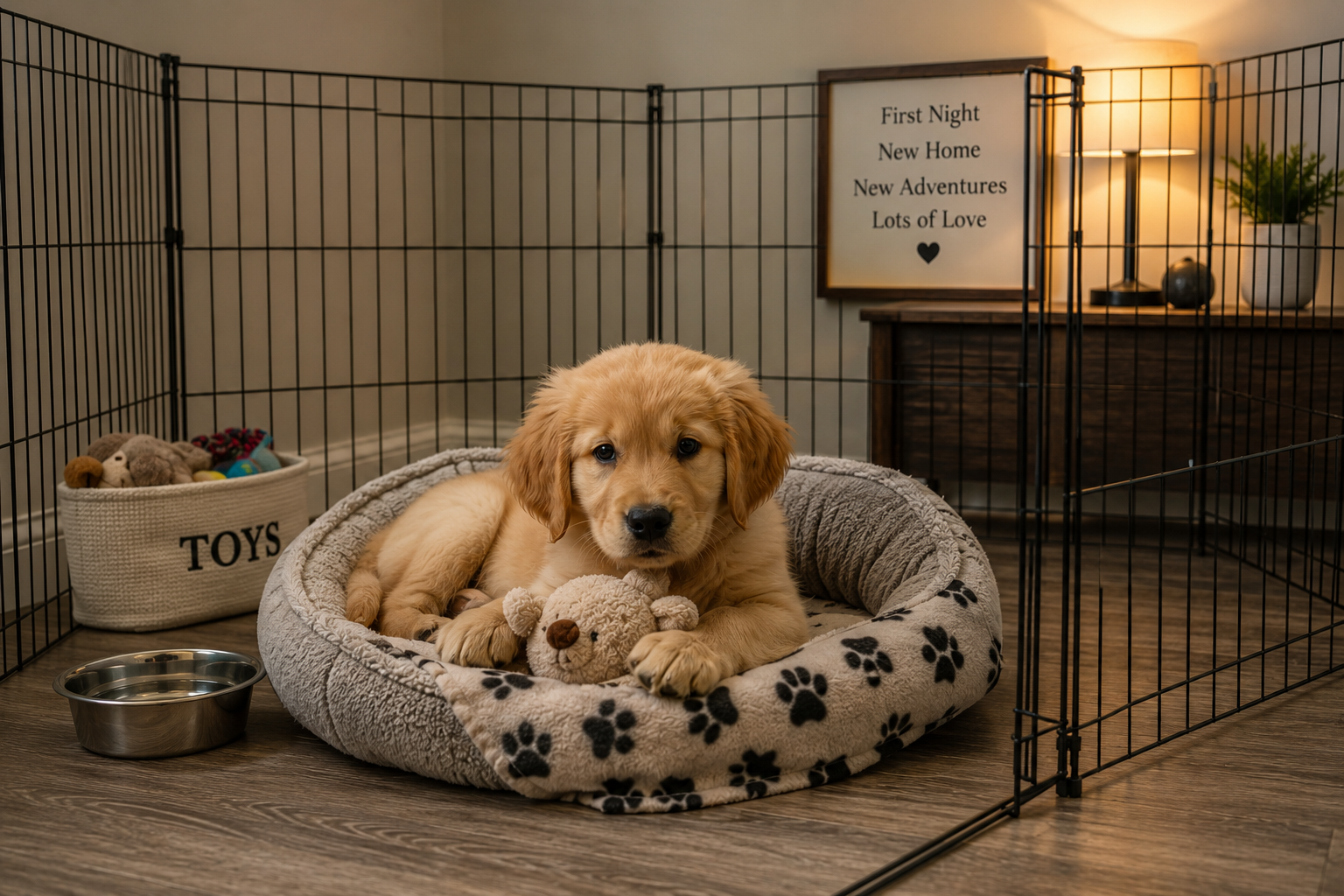
First night in their new home
Category: Bringing Puppy Home
Bringing home a new puppy is an exciting milestone, but it can also be overwhelming—for both you and your puppy. While you may have been counting down the days, your puppy has just experienced one of the biggest changes of their young life. They've left everything familiar behind, including their mother, littermates, home, and daily routine.
Your goal on the first night isn't to begin formal training or achieve a perfect routine. Instead, focus on helping your puppy feel safe, secure, and comfortable in their new environment.
Keep Expectations Realistic
Your puppy may:
Cry or whine when left alone.
Be hesitant to eat or drink.
Need frequent bathroom breaks.
Explore every corner of your home.
Become overtired and "zoomy."
Sleep more than usual.
All of these behaviours are perfectly normal during the first 24–48 hours.
Create a Calm Environment
Avoid introducing your puppy to lots of visitors, noisy activities, or exciting outings on the first day. Instead, provide a calm, predictable environment where they can begin to settle in.
Choose one or two rooms for your puppy to explore rather than giving them access to the entire house immediately. Smaller spaces are less overwhelming and make supervision much easier.
Begin Establishing a Routine
Dogs thrive on predictability.
Start introducing a simple daily routine that includes:
Regular bathroom breaks.
Meals at consistent times.
Short periods of play.
Rest and quiet time.
Opportunities to explore safely.
Gentle interactions with family members.
Remember that puppies need significantly more sleep than many people expect—often 18–20 hours per day.
Introduce the Crate Positively
If you plan to use a crate, begin creating positive associations right away.
Rather than placing your puppy in the crate and closing the door immediately, encourage them to explore it voluntarily. Toss a few treats inside, offer a stuffed food toy, or feed meals near or inside the crate with the door left open.
The goal is for your puppy to view the crate as a comfortable, safe place—not a punishment.
Prepare for Overnight
It's completely normal for puppies to feel lonely overnight.
Consider placing the crate or sleeping area close to where you sleep for the first several nights. Your presence can help your puppy feel more secure while they adjust to their new home.
Take your puppy outside immediately before bedtime and be prepared for one or more overnight bathroom trips, depending on their age.
If your puppy wakes and needs to go outside:
Keep lights dim.
Speak quietly.
Take them directly to their bathroom area.
Reward them for toileting.
Return calmly indoors without turning it into playtime.
This helps your puppy learn that nighttime is for sleeping, not playing.
Start Building Positive Associations
Your puppy is constantly learning.
Every new experience teaches them something about the world.
Make those lessons positive by pairing new experiences with:
Small food rewards.
Calm praise.
Gentle encouragement.
Opportunities to choose to investigate new things at their own pace.
Avoid forcing your puppy into unfamiliar situations if they appear worried. Confidence develops through positive experiences, not pressure.
Focus on Relationship First
The first night isn't about teaching lots of commands.
Instead, focus on building trust.
Spend time:
Sitting quietly together.
Hand-feeding part of a meal.
Gently playing.
Rewarding your puppy for checking in with you.
Allowing plenty of opportunities for rest.
A strong relationship becomes the foundation for all future training.
Common Mistakes to Avoid
Giving your puppy unrestricted access to the entire house.
Introducing too many visitors on the first day.
Expecting your puppy to sleep through the night immediately.
Punishing accidents or crying.
Keeping your puppy awake because everyone wants to play.
Forcing interactions with unfamiliar people or dogs.
Becoming discouraged if the first night isn't perfect.
Remember, your puppy is learning about their new home one experience at a time.
When Should Training Begin?
Training begins the moment your puppy comes home—but it doesn't start with "sit" or "stay."
Your puppy is already learning:
Whether people are safe.
Where to toilet.
How to relax.
That responding to their name is rewarding.
That choosing to engage with you leads to good things.
By focusing on positive experiences from day one, you'll lay the foundation for a confident, resilient, and well-mannered adult dog.
How Paus-n-Train Can Help
At Paus-n-Train, we believe successful training starts with building trust and confidence from the very beginning. Our Puppy Prep School is designed specifically for puppies under 16 weeks of age and provides positive, science-based guidance to help you navigate those important first weeks together.
Whether you're preparing for your puppy's first night at home or looking ahead to socialization, manners, and life skills, we're here to support both ends of the leash.