How Do I Prevent and Manage Destructive Chewing?
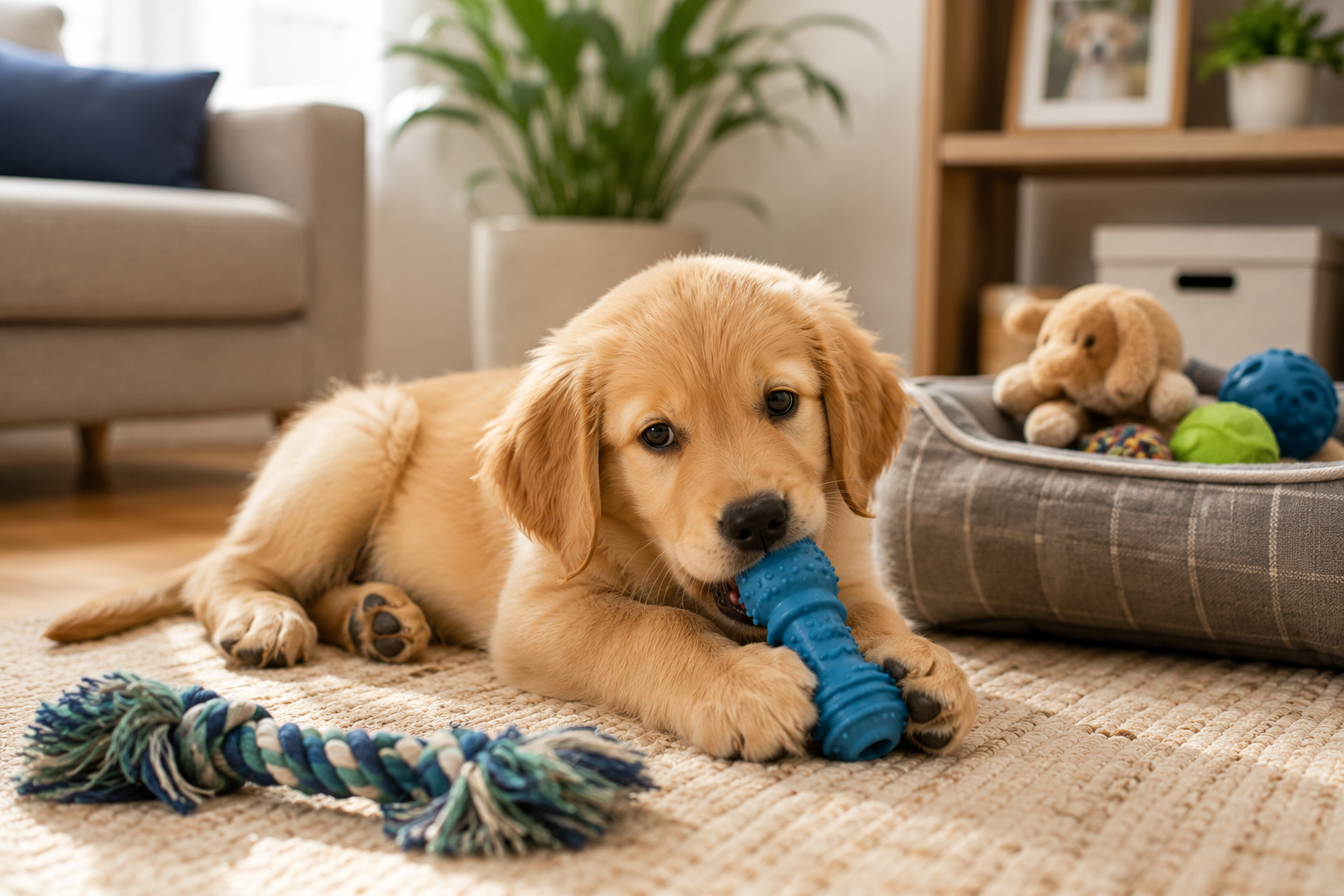
Puppy chewing on rubber toy
Quick Answer
Chewing is a normal dog behaviour. The goal isn't to teach your dog never to chew—it's to teach them what is appropriate to chew while preventing access to things you don't want damaged.
Successful chewing management combines three things:
Prevent access to inappropriate items.
Provide appealing, appropriate chewing options.
Supervise and redirect before unwanted chewing becomes a well-practised habit.
For puppies, chewing can be especially intense during teething. For adolescent and adult dogs, destructive chewing may also be related to boredom, insufficient enrichment, stress, frustration or simply having learned that chewing certain objects is enjoyable.
Don't just take things away. Give your dog an appropriate alternative.
At a Glance
To reduce destructive chewing:
Puppy-proof your environment.
Limit unsupervised freedom.
Keep tempting objects out of reach.
Provide several safe and appropriate chew options.
Rotate chews to maintain interest.
Use food-stuffed enrichment toys.
Supervise when your dog has access to the house.
Calmly trade inappropriate objects rather than chasing your dog.
Reward your dog for choosing appropriate chews.
Make sure your dog is getting adequate sleep, exercise, enrichment and interaction.
Consider an underlying medical or behavioural issue if chewing suddenly changes or becomes extreme, including the possibility of teething phases occurring again around 8–10 months of age as the back molars come in.
Management prevents mistakes while training teaches better choices.
Why Do Dogs Chew?
Because they're dogs!
Chewing is a natural behaviour that serves several purposes.
Dogs may chew because it:
Feels good.
Provides mental stimulation.
Helps them explore objects.
Relieves discomfort during teething.
Provides an outlet for excitement or frustration.
Helps some dogs relax.
Gives them something to do.
The question isn't really:
"How do I stop my dog from chewing?"
A better question is:
"How do I help my dog learn what they can chew?"
Why Is My Puppy Chewing Everything?
Puppies explore much of their world with their mouths.
Just as human babies pick things up with their hands, puppies investigate objects by grabbing, carrying and chewing them.
Then teething arrives.
As puppy teeth are replaced by adult teeth, chewing can become particularly appealing.
Your shoes aren't being destroyed because your puppy is angry with you.
They're being chewed because they're accessible, smell strongly like you and have an interesting texture.
From your puppy's perspective, that may make them an excellent chew toy.
Step 1: Puppy-Proof Your Environment
One of the most effective ways to stop destructive chewing is also one of the simplest:
Don't make inappropriate items available.
Put away:
Shoes.
Children's toys.
Remote controls.
Laundry.
Bags.
Books.
Electrical cords.
Garbage.
Food packaging.
Anything small enough to swallow.
This isn't avoiding training.
It's good training.
Every time your puppy spends 20 minutes happily chewing a shoe, they're practising and reinforcing that behaviour.
Preventing access stops that rehearsal.
Step 2: Limit Freedom
A puppy doesn't need immediate access to your entire house.
Use management tools such as:
Baby gates.
Exercise pens.
Crates.
Puppy-safe rooms.
Closed doors.
A leash attached to you while supervised.
As your dog's ability to make appropriate choices improves, gradually increase their freedom.
Think of household freedom as something your puppy earns through demonstrated reliability.
Step 3: Provide Appropriate Things to Chew
Simply removing everything your dog wants to chew doesn't address their need to perform the behaviour.
Instead, provide appropriate alternatives.
Depending on your individual dog, these might include:
Durable rubber toys.
Food-stuffed toys.
Veterinarian-approved chews.
Appropriate edible chews.
Puppy-safe teething toys.
Frozen food toys.
Other enrichment items designed for chewing.
Supervise your dog with new chew products until you know how they interact with them.
A chew that's appropriate for one dog may not be safe for another.
Dogs who tear off and swallow large pieces need different options than dogs who gently gnaw.
Step 4: Make Appropriate Chews Interesting
Imagine your puppy has two choices:
An old rubber toy that's been lying on the floor for three weeks.
Or...
Your brand-new leather shoe.
Which one smells more interesting?
We sometimes unintentionally make forbidden objects much more valuable than the things dogs are allowed to have.
Try rotating your dog's toys and chews rather than leaving everything available all the time.
You can also increase their value by:
Stuffing toys with food.
Freezing food-stuffed toys.
Playing with appropriate toys together.
Occasionally surprising your dog with a chew.
Putting toys away and reintroducing them later.
Novelty matters.
Step 5: Catch Your Dog Making Good Choices
This is something we frequently forget.
Your puppy lies quietly chewing their toy.
Nothing happens.
Five minutes later they grab a sock.
Suddenly everyone in the house is paying attention.
From the dog's perspective:
Sock = humans become very interesting.
Notice your dog when they're doing exactly what you want.
Walk past and quietly drop a treat beside them.
Praise them.
Occasionally interact with them.
Teach them:
"Choosing my own toys pays too."
What Should I Do When My Dog Chews the Wrong Thing?
Stay calm.
If the object isn't immediately dangerous, avoid turning the situation into a dramatic chase.
Instead, approach calmly and trade the object for something your dog values.
That might be:
A treat.
An appropriate chew.
A food-stuffed toy.
A favourite toy.
Once your dog releases the inappropriate object, remove it and consider why they were able to access it.
The accident provides useful information about your management plan.
Why Chasing Your Dog Can Make Things Worse
Your puppy grabs a sock.
You run toward them.
They run away.
You chase them around the kitchen table.
Congratulations—you may have accidentally invented your puppy's favourite game.
For some dogs, stealing objects quickly becomes an excellent way to initiate interaction.
Instead of chasing, teach a calm trade and make it worthwhile for your dog to bring or release objects.
Don't Constantly Take Things Away
If humans repeatedly approach only to confiscate valuable things, some dogs begin becoming defensive.
They may:
Run away with objects.
Swallow things quickly.
Freeze when approached.
Guard objects.
Growl.
Whenever it's safe and appropriate, trading is preferable to forcibly removing an item.
We want your dog to learn:
"People approaching when I have something good makes even better things happen."
What About Bitter Sprays?
Taste deterrents can sometimes be useful as part of a larger management plan, particularly for objects that can't easily be moved.
But they aren't a complete solution.
Some dogs dislike them.
Some dogs don't care.
And deterrents still don't teach your dog what they should chew instead.
If you're relying on bitter spray throughout the house, take another look at your management and enrichment plan.
Is My Dog Chewing Because They're Bored?
Possibly.
Dogs need appropriate opportunities for both physical activity and mental enrichment.
Depending on the dog, useful activities might include:
Sniffing walks.
Training sessions.
Food puzzles.
Searching for food.
Chewing.
Licking.
Play.
Exploring new environments.
Appropriate social interaction.
But more exercise isn't always the answer.
An overtired puppy can also become increasingly wild, mouthy and destructive.
Sometimes the puppy who appears to need another hour of activity actually needs a nap.
Don't Forget Sleep
Puppies need a tremendous amount of sleep.
When they're overtired, you may notice:
Increased biting.
Frantic activity.
Zoomies.
Difficulty settling.
Barking.
Poor impulse control.
Destructive chewing.
Providing predictable periods of activity and rest can make puppy behaviour much easier to manage.
What If My Dog Chews When I'm Away?
Chewing that happens primarily when a dog is left alone deserves closer attention.
Sometimes the explanation is straightforward: the dog has access to tempting objects and nothing better to do.
But destructive behaviour during absences can also occur when dogs experience distress related to being alone.
Look at the larger picture.
Does your dog also:
Bark or howl after you leave?
Pace?
Drool excessively?
Scratch or chew around doors and windows?
Attempt to escape?
Refuse food they would normally enjoy?
Become distressed as you prepare to leave?
If so, this may be more than a chewing problem.
Seek guidance from an appropriately qualified professional rather than simply increasing confinement or correcting the damage.
When Destructive Chewing May Need Veterinary Attention
Sudden or unusual chewing behaviour can sometimes indicate an underlying problem.
Contact your veterinarian if your dog:
Suddenly begins chewing or eating unusual objects.
Regularly consumes non-food items.
Breaks or damages teeth.
Has bleeding or painful gums.
Shows difficulty eating.
Vomits after chewing objects.
May have swallowed something dangerous.
Experiences a significant unexplained change in behaviour.
Swallowed objects can cause intestinal obstruction and may be a medical emergency.
If you suspect your dog has swallowed something potentially dangerous, contact your veterinarian promptly.
Choose Chews With Safety in Mind
Not everything marketed for dogs is appropriate for every dog.
Consider:
Your dog's size.
Chewing strength.
Whether they swallow pieces.
The hardness of the item.
How quickly it breaks down.
Whether it could become a choking hazard.
Extremely hard items can potentially damage teeth.
If you're unsure whether a particular chew is appropriate for your dog, ask your veterinarian.
And supervise until you understand your dog's chewing style.
Common Mistakes to Avoid
Giving a puppy too much freedom too soon.
Leaving tempting objects within reach.
Punishing a dog after discovering damage.
Chasing a dog who steals something.
Providing only one boring chew option.
Failing to reward appropriate chewing.
Expecting a puppy not to chew.
Assuming every destructive behaviour is caused by boredom.
Increasing exercise when an overtired puppy actually needs rest.
Using the crate as punishment after something is destroyed.
Ignoring sudden changes in chewing behaviour.
Giving chews without considering whether they're appropriate for your individual dog.
Frequently Asked Questions
When do puppies stop chewing everything?
Chewing often becomes particularly noticeable during puppyhood and teething, but dogs don't simply stop needing to chew once they become adults.
The intensity may decrease as your puppy matures, but appropriate chewing opportunities should remain part of their life.
Should I punish my puppy for chewing furniture?
No.
Punishment doesn't teach your puppy what they should chew instead and can create fear or conflict.
Prevent access where possible, interrupt calmly when necessary and redirect your puppy toward an appropriate option.
Why does my dog chew my belongings instead of their toys?
Your belongings may smell like you, have interesting textures or simply be more novel than toys that are always available.
Make appropriate chewing options valuable while reducing access to tempting household objects.
Should I take something away if my dog growls?
A growl is important communication.
Don't punish the growl.
If your dog freezes, stiffens, growls or otherwise becomes uncomfortable when you approach an object, avoid creating a confrontation and seek professional guidance. Resource guarding requires a thoughtful training plan rather than forcibly taking possessions away.
Can I leave my puppy with a chew when I go out?
That depends on the puppy and the chew.
Only leave your puppy unattended with an item you've determined they can use safely. Some products that are appropriate under supervision may not be suitable when nobody is present.
Key Takeaways
Destructive chewing is best addressed through management, appropriate outlets and training—not punishment.
Remember:
✔ Chewing is normal.
✔ Prevent access to valuable or dangerous objects.
✔ Limit freedom while your puppy is learning.
✔ Provide appealing alternatives.
✔ Rotate toys and enrichment.
✔ Reward appropriate chewing.
✔ Trade rather than chase.
✔ Make sure your dog is getting enough enrichment and enough rest.
✔ Choose chews based on your individual dog's chewing style.
✔ Investigate sudden or extreme changes in chewing behaviour.
Instead of asking:
"How do I stop my dog from chewing?"
Ask:
"How can I make it easy for my dog to choose the right things to chew?"
That question leads to a much more effective training plan.
How Paus-n-Train Can Help
At Paus-n-Train, we believe many common behaviour problems become easier when we stop focusing exclusively on correcting unwanted behaviour and start teaching dogs what we'd like them to do instead.
For young puppies, our Puppy Prep School helps families establish good habits early while navigating everyday puppy challenges such as chewing, biting, housetraining, settling, crate comfort, socialization, leash skills and recall foundations.
For older dogs, our Dog Manners program focuses on practical skills that make everyday life together easier, including settling, impulse control, polite behaviour around people, loose-leash walking and recall.
Students also receive access to digital homework resources so families can continue practising and reviewing their training at home after their classes have ended.
If you're currently living with a puppy who seems determined to taste-test your entire home, remember that chewing itself isn't the problem.
Our job is to provide appropriate outlets, prevent unwanted practice and help our dogs learn which choices pay off.