How Do I Prevent and Manage Digging?
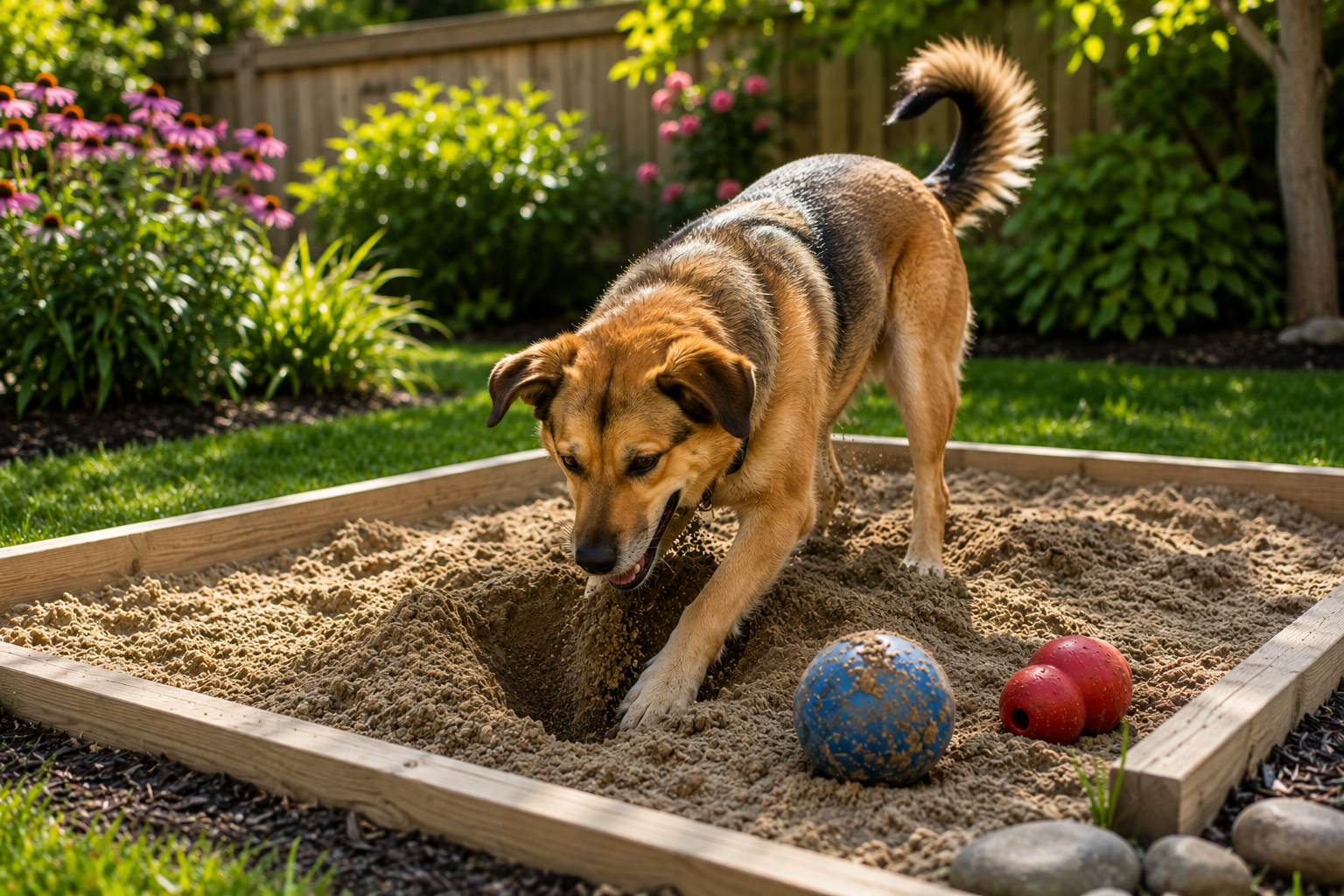
A happy dog digging in the garden sandbox
Quick Answer
Digging is a completely normal dog behaviour. Some dogs dig because it is fun, some are following interesting smells, some are trying to cool themselves, and others may dig because they are bored, frustrated or attempting to escape.
The goal usually shouldn't be to eliminate digging altogether. Instead, determine why your dog is digging, prevent access to areas where digging is inappropriate, and whenever possible provide an acceptable place where your dog is allowed to dig.
A successful plan combines:
Management.
Supervision.
Appropriate enrichment.
Reinforcing alternative behaviours.
Providing an acceptable outlet for digging when your dog enjoys it.
Rather than continually telling your dog where they can't dig, teach them where they can.
At a Glance
If your dog is digging:
Identify when, where and why the digging happens.
Supervise your dog outside.
Prevent repeated access to favourite inappropriate digging areas.
Increase appropriate mental and physical enrichment.
Provide a designated digging area when appropriate.
Make the permitted digging area rewarding.
Redirect before your dog becomes deeply involved in unwanted digging.
Avoid punishment after holes have already been dug.
Check whether your dog is digging to escape from the yard.
Provide shade, water and comfortable resting areas during warm weather.
Consider an underlying behavioural or medical issue if the behaviour suddenly changes.
Digging is easier to manage when we understand the function the behaviour serves for the dog.
Why Do Dogs Dig?
Digging is part of the normal behavioural repertoire of dogs.
Long before dogs shared our homes and carefully landscaped gardens, digging could serve important functions.
Dogs may dig to:
Search for prey or interesting scents.
Bury valuable items.
Create a cooler resting spot.
Investigate the environment.
Escape confinement.
Release energy.
Entertain themselves.
Relieve frustration.
Follow an instinctive breed-related tendency.
Sometimes the answer is simply:
Digging feels good.
That means trying to punish the behaviour without addressing the reason behind it often leads to frustration for both the dog and the owner.
Is Digging More Common in Some Dogs?
Yes.
Individual personality matters, but genetics can also influence how motivated a dog is to dig.
Dogs historically bred to pursue animals underground may find digging particularly rewarding.
Terriers and Dachshunds are obvious examples, but dogs of virtually any breed—or mix of breeds—may enjoy digging.
Rather than thinking:
"My dog should know better."
Consider:
"My dog may be doing something that comes very naturally to them."
That doesn't mean you have to sacrifice your garden.
It means your training plan should account for the strength of the behaviour you're trying to manage.
Step 1: Figure Out Why Your Dog Is Digging
Before choosing a solution, observe the pattern.
Ask yourself:
Where does my dog dig?
What time of day does it happen?
Is the dog alone or supervised?
Is it always in the same location?
Are there rodents or wildlife nearby?
Is the ground cool there?
Does digging happen after exercise?
Does it occur when the dog has been outside alone for a long time?
Is the dog digging beside the fence?
Are they burying toys, treats or chews?
Different motivations require different solutions.
Step 2: Prevent Rehearsal
Every time your dog spends 20 minutes enthusiastically excavating your flower garden, they're getting more practice at digging there.
Management stops that rehearsal.
Depending on your property, you might:
Fence off garden beds.
Use temporary garden barriers.
Supervise outdoor time.
Use a long line when appropriate.
Block access to a frequently targeted location.
Bring your dog indoors when you're unable to supervise.
Management isn't admitting defeat.
It creates the opportunity for training to work.
Step 3: Create a Designated Digging Area
For dogs who genuinely love to dig, providing an appropriate outlet can be enormously helpful.
This might be:
A sandbox.
A children's wading pool filled with clean sand.
A designated section of the garden.
A contained soil area.
A purpose-built digging box.
Choose an area that is large enough for your dog to enjoy comfortably.
Then teach:
"Digging here is fantastic."
How Do I Teach My Dog to Use a Digging Box?
Make the area valuable.
Begin by burying items your dog enjoys just below the surface.
You might use:
Favourite toys.
Balls.
Safe chew toys.
Small food rewards.
A toy the dog enjoys searching for.
Encourage your dog to investigate.
If they begin digging, praise them and allow them to continue.
At first, make the treasures very easy to find.
As your dog understands the game, bury them a little deeper.
The goal is to create a clear distinction:
This area = digging is rewarding.
Garden bed = digging doesn't happen.
Step 4: Redirect Early
Timing matters.
If your dog has already excavated half the vegetable garden, you're late.
Watch for early signs such as:
Intense sniffing.
Pawing at the ground.
Scratching.
Returning to a favourite digging location.
At that point, calmly redirect your dog toward:
Their digging area.
A search game.
A toy.
A short training activity.
Another appropriate activity.
Then reward engagement with the new option.
Don't Turn Digging Into a Chase Game
Your dog starts digging.
You run across the yard shouting.
Your dog bounds away.
You follow.
Suddenly digging has created an exciting interaction.
Some dogs quickly learn:
Digging makes humans play chase.
Instead, stay calm.
Interrupt or redirect without creating extra excitement.
Is My Dog Digging Because They're Bored?
Possibly.
A dog left alone in a yard for long periods may invent their own activities.
Digging can be excellent entertainment.
Consider whether your dog's day includes enough opportunities for:
Sniffing.
Exploring.
Training.
Chewing.
Searching for food.
Playing.
Appropriate exercise.
Interaction with people.
Rest.
Simply having a large yard does not automatically provide enrichment.
A dog may have several acres available and still be bored if nothing interesting happens there.
Give Your Dog Something to Do Outside
Instead of simply putting your dog into the yard, occasionally turn the yard into an enrichment environment.
Try:
Scatter feeding part of a meal in the grass.
Hiding treats for your dog to locate.
Practising recall games.
Short training sessions.
Food puzzles.
Appropriate chew items.
Playing together.
Using the designated digging area.
This changes outdoor time from:
"Go entertain yourself."
to:
"There are lots of appropriate things to do here."
Is My Dog Digging to Cool Down?
Some dogs dig shallow depressions in cool soil and then lie in them.
This behaviour may become more common during warm weather.
If your dog is doing this, make sure they have access to:
Fresh drinking water.
Shade.
A cool indoor environment.
Appropriate cooling options.
Comfortable shaded resting surfaces.
On very warm days, bringing your dog indoors may be more appropriate than trying to stop the digging itself.
Is My Dog Hunting Something?
If your dog repeatedly digs in one very specific area, there may be something interesting underground.
They may smell:
Rodents.
Insects.
Wildlife.
Previously buried food.
Other animal scents.
Dogs experience the world primarily through smell.
What looks like a completely ordinary patch of lawn to us may be incredibly interesting to them.
If wildlife is contributing to the problem, address the underlying yard issue using humane methods rather than simply correcting the dog.
What If My Dog Is Digging Under the Fence?
This deserves particular attention.
Fence-line digging isn't simply a landscaping problem.
It may become a safety problem.
Dogs may dig beneath fences because they:
Want to explore.
See or smell something outside.
Are attempting to reach another dog.
Are frightened.
Are experiencing frustration.
Have learned they can escape.
Are distressed when left outside.
Until you understand and address the motivation, don't leave the dog unattended in the yard.
You may also need to improve the physical security of the fence.
If the behaviour appears related to anxiety, fear or separation distress, seek qualified professional support rather than relying only on stronger barriers.
What If My Dog Buries Toys or Chews?
Burying valuable items is normal behaviour for some dogs.
Your dog may be saving something valuable for later.
If you don't want food or chews buried throughout your lawn, consider giving those items:
Indoors.
In a crate or exercise pen.
In another supervised location.
Alternatively, allow burying within a designated digging area if it is safe to do so.
Should I Fill the Hole With My Dog's Poop?
This is sometimes suggested as a way to discourage digging.
We don't recommend relying on unpleasant surprises or aversive strategies.
Even if they temporarily discourage digging in one hole, they don't teach your dog what to do instead.
The dog can simply move two feet away and start another hole.
A better long-term strategy is:
Prevent inappropriate digging + provide appropriate outlets + reinforce better choices.
Should I Punish My Dog for Digging?
Punishing your dog after discovering a hole won't help.
Your dog cannot connect your anger now with digging that may have occurred much earlier.
Even if you catch your dog digging, yelling or physical corrections don't address the motivation behind the behaviour.
Punishment may simply teach your dog:
"Don't dig when the human is watching."
They may continue doing it whenever you're absent.
Instead, supervise, interrupt early and redirect toward an acceptable activity.
What About Putting Chicken Wire or Rocks in Digging Areas?
Physical barriers can sometimes be useful management tools, but safety must come first.
Anything placed in or under the ground should not create:
Sharp edges.
Paw injuries.
Broken nails.
Entanglement hazards.
Choking hazards.
Often, simply fencing off valuable landscaping or providing a designated digging location is safer and easier.
Can More Exercise Stop Digging?
Sometimes additional appropriate activity helps—but don't assume every behavioural challenge requires more physical exercise.
A dog can be physically tired and still need:
Mental stimulation.
Sniffing opportunities.
Chewing.
Problem solving.
Rest.
Appropriate outlets for natural behaviours.
For some dogs, providing a 10-minute scent-searching activity or digging opportunity is more satisfying than simply adding another fast-paced walk.
Think in terms of meeting behavioural needs, not just exhausting the dog.
What If My Puppy Is Digging?
Puppies explore.
They may suddenly discover that soil:
Smells interesting.
Moves when scratched.
Contains roots.
Contains insects.
Makes humans react dramatically.
Avoid allowing digging to become a well-practised habit in areas where you don't want it.
Supervise outdoor time, redirect appropriately and consider providing a legal digging area early.
Just as with chewing, puppies benefit when we make the correct choice easier than the unwanted one.
Common Mistakes to Avoid
Punishing a dog after finding a hole.
Leaving a frequent digger unsupervised outside.
Assuming the dog is being spiteful.
Continually filling holes without addressing why they are being dug.
Chasing the dog away from digging.
Providing no alternative outlet.
Assuming a large yard automatically provides enough enrichment.
Ignoring fence-line digging.
Increasing physical exercise without considering mental enrichment.
Expecting a breed with strong digging instincts never to dig.
Waiting until the dog is deeply engaged before trying to redirect them.
Frequently Asked Questions
Will my puppy grow out of digging?
Maybe—but don't count on it.
Some puppies dig primarily because they're exploring, while others discover that digging is highly rewarding and continue into adulthood.
Preventing repeated inappropriate digging and providing acceptable alternatives can help shape better habits.
Can I teach my dog never to dig?
You may be able to dramatically reduce inappropriate digging, but remember that digging itself is a normal behaviour.
For dogs with a strong desire to dig, providing an acceptable outlet is often more realistic than trying to eliminate the behaviour completely.
Why does my dog dig immediately after I fill the hole?
The area may still smell interesting, the disturbed soil may be easier and more enjoyable to excavate, or your dog has simply learned that this is a rewarding digging location.
Block access temporarily while reinforcing digging somewhere appropriate.
Why does my dog dig in their bed?
Scratching or "digging" bedding before lying down is another normal canine behaviour.
Unless your dog is destroying or eating the bedding, it often doesn't require intervention.
Why does my dog suddenly dig much more than before?
Look for changes in:
Weather.
Wildlife activity.
Amount of time spent alone outside.
Exercise and enrichment.
Household routine.
Stress levels.
A sudden significant behavioural change without an obvious explanation can also be worth discussing with your veterinarian.
Key Takeaways
Managing digging is about understanding why the behaviour happens and giving your dog appropriate choices.
Remember:
✔ Digging is normal dog behaviour.
✔ Identify what motivates your individual dog.
✔ Prevent repeated access to inappropriate digging locations.
✔ Supervise outdoor time while habits are developing.
✔ Provide mental and physical enrichment.
✔ Consider creating a designated digging area.
✔ Make appropriate digging rewarding.
✔ Redirect before the behaviour is fully underway.
✔ Take fence-line digging seriously.
✔ Don't punish your dog for holes you discover later.
Instead of asking:
"How do I stop my dog from digging?"
Try asking:
"What need is my dog meeting by digging, and how can I give them a better place to meet it?"
That creates a much more useful training plan.
How Paus-n-Train Can Help
At Paus-n-Train, we believe successful dog training involves more than stopping behaviours we find inconvenient. It also means understanding why dogs behave the way they do and helping them develop appropriate ways to meet their needs.
For puppies, our Puppy Prep School helps families establish practical habits early while navigating common challenges such as chewing, digging, housetraining, crate training, settling, leash skills, recall and socialization.
For older dogs, our Dog Manners program focuses on everyday skills that help dogs make better choices while helping owners learn how management, enrichment and positive reinforcement work together.
Students also receive access to digital homework resources so they can continue practising and reviewing training at home after their classes have ended.
If your backyard currently resembles the beginning of an archaeological excavation, remember:
Your dog isn't trying to ruin your garden. They're performing a behaviour that makes sense to them.
Our job is to manage the environment, understand the motivation and teach them where those natural behaviours can be expressed appropriately.